 Clinic Timings: 9.30AM to 7.30PM
 +91-9821999447
 By Crown and roots |
If you’re a Central Government Health Scheme (CGHS) beneficiary and your dentist has recommended a root canal treatment, one of the first questions that may come to mind is:
“Will CGHS cover the cost of Root Canal Treatment?”
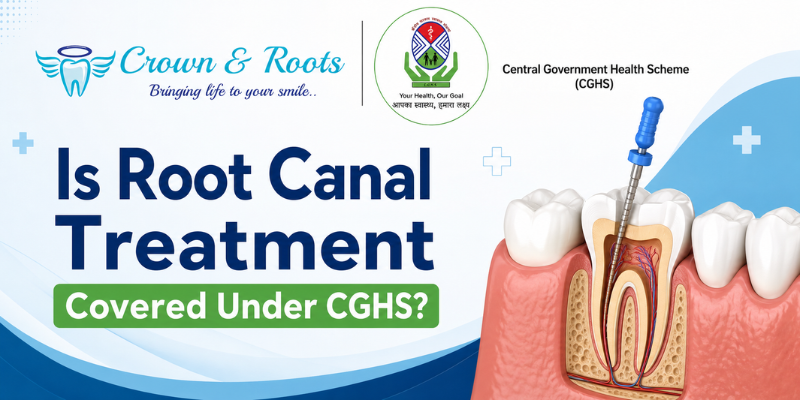
The short answer is yes—CGHS generally covers Root Canal Treatment (RCT) for eligible beneficiaries when the procedure is medically necessary and carried out according to CGHS rules and guidelines. However, the exact coverage depends on factors such as your eligibility, the treating hospital or dental clinic, and the treatment approved under the latest CGHS package rates.
In this guide, we’ll explain how CGHS covers Root Canal Treatment, who is eligible, what the treatment involves, and what you should know before starting your dental procedure.
Root Canal Treatment (RCT) is a dental procedure used to save a tooth that has become infected or severely damaged. Inside every tooth is a soft tissue called the pulp, which contains nerves and blood vessels. When this pulp becomes infected because of deep decay, cracks, injury, or repeated dental procedures, bacteria can spread and cause pain, swelling, or even an abscess.
During a root canal treatment, the dentist:
The aim is to preserve the natural tooth instead of removing it.
Yes. Root Canal Treatment is included under CGHS dental benefits for eligible beneficiaries when it is clinically required.
CGHS provides coverage for various dental treatments through its Wellness Centres and empanelled dental hospitals or clinics. The treatment is generally provided according to approved CGHS package rates and applicable referral guidelines.
Coverage may include:
Some restorative procedures, such as dental crowns, may have separate eligibility criteria or package provisions depending on the clinical condition and current CGHS guidelines.
Dental treatment under CGHS is available to eligible beneficiaries enrolled in the scheme.
This generally includes:
Patients should carry a valid CGHS card and follow the prescribed treatment process. Depending on the case, a referral from a CGHS Wellness Centre may also be required.
A dentist may recommend Root Canal Treatment if you have:
Ignoring these symptoms can allow the infection to spread and may eventually lead to tooth loss.
Not necessarily.
Some dental problems can be treated with fillings or other restorative procedures if detected early. A root canal is usually recommended only when the pulp inside the tooth has become infected or irreversibly inflamed.
Your dentist will determine the most suitable treatment after examining the tooth and reviewing dental X-rays.
The treatment usually requires one or two appointments, depending on:
Complex cases may require additional visits.
Modern Root Canal Treatment is generally not considered painful.
Local anaesthesia is used to numb the affected tooth, making the procedure comfortable for most patients. Mild soreness for a day or two after treatment is common and usually improves with prescribed medication.
Many patients find that the pain caused by the infection is much worse than the treatment itself.
To avoid delays, it is helpful to:
Being informed before your appointment can make the process smoother.
While CGHS provides access to dental care through empanelled facilities, choosing an experienced dental team is equally important.
Look for a clinic that offers:
If you are looking for CGHS dental treatment in South Delhi, Crown and Roots Dental Clinic provides comprehensive dental consultations and advanced root canal treatment for eligible CGHS beneficiaries. The clinic focuses on accurate diagnosis, evidence-based treatment, and patient comfort throughout the treatment process.
Eligible beneficiaries can receive treatment according to CGHS rules and approved package rates. Coverage depends on eligibility and the applicable guidelines.
CGHS benefits are generally available through CGHS Wellness Centres and empanelled dental hospitals or clinics.
Coverage for crowns depends on the clinical requirement and the applicable CGHS package provisions.
Only a qualified dentist can determine this after examining your tooth and reviewing dental X-rays.
If the pulp inside the tooth is permanently infected, the infection usually does not heal on its own. Early dental treatment helps prevent complications.
Root Canal Treatment is one of the most effective ways to save a damaged or infected tooth. For eligible CGHS beneficiaries, the treatment is generally covered when it is medically necessary and provided according to CGHS guidelines.
If you have persistent tooth pain, swelling, or sensitivity, don’t delay your dental examination. Early diagnosis not only helps relieve discomfort but also increases the chances of saving your natural tooth.
For patients seeking CGHS-supported dental care in South Delhi, Crown and Roots Dental Clinic offers comprehensive consultations, advanced diagnostic technology, and patient-centred treatment to help you make informed decisions about your oral health.
call us at (011-4015 9447) or
whatsapp at +91 9821999447
Avoid waiting time and schedule your appointment as per your preference.
 E-consultation